How Beginners Can Make Money Using AI Tools in 2026: The Ultimate Guide
If you have spent any time on TikTok, YouTube, or Reddit recently, you have probably seen the viral videos: self-proclaimed "AI gurus" promising that you can make thousands of dollars a day from your laptop with just three clicks. It is incredibly tempting to believe that artificial intelligence has finally unlocked a secret, zero-effort path to financial freedom.
Let's start with a necessary reality check: AI is not a magic ATM, and it is not a get-rich-quick scheme. In 2026, the artificial intelligence landscape has matured. The 2023 gold rush of simply generating a generic ChatGPT article and selling it for top dollar on Upwork is over. The market has corrected itself, and clients can easily spot low-effort, copy-pasted AI work.
However, this does not mean the opportunity is gone—it simply means the rules of the game have changed.
The people who are actually making money with AI today are not selling "AI services." They are selling traditional, high-demand business solutions (like marketing, software development, design, and customer service) and using AI behind the scenes to do the work ten times faster and with professional-grade quality. AI is the ultimate leverage. It fills your skill gaps and allows you, as a complete beginner, to compete with seasoned agencies.
If you are willing to put in the work to learn the tools and build a real strategy, you are in the right place. Here is the comprehensive, reality-tested, 2000-word guide on how beginners can build highly profitable income streams using AI tools in 2026.
The 2026 Paradigm Shift: Stop Selling AI, Start Solving Problems
Before diving into the specific monetization strategies, we need to establish a foundational rule. The biggest mistake beginners make is trying to sell "AI." Businesses do not want to buy "AI." They want to buy more time, more leads, and more sales.
If you have zero understanding of what makes a good YouTube video, an AI scriptwriter will just help you make bad videos faster. If you do not understand what local businesses need, building them an AI chatbot will not result in a sale.
To succeed this year, you must combine AI with a proven business model. You act as the director, and the AI acts as your production team. Your job is to engineer the prompts, edit the outputs, and package the final result into something a client or customer actually wants to buy.
Here are the top five most lucrative, beginner-friendly niches to tackle right now.

1. "Vibe Coding" & Building No-Code Micro-SaaS
This is arguably the biggest and most exciting trend of 2026. Two years ago, if you wanted to build a software product or a mobile app, you had to spend years learning Python, React, or Swift. Today, the hottest side hustle is "vibe coding"—using AI to write, test, and deploy software using plain English.
You can now build Micro-SaaS (Software as a Service) products that solve highly specific problems and charge users a monthly subscription fee.
The Strategy
You identify a small, annoying problem in a specific industry and build a simple web app to solve it. For example: an invoice generator specifically for freelance makeup artists, or a custom calorie tracker for a specific niche diet.
The Execution Steps
- The Idea: Search forums like Reddit or Quora for phrases like "I hate how long it takes to..." or "Is there a tool that..."
- The Build: Use next-generation AI coding editors. Tools like Lovable, Bolt, and Cursor are built for this. You literally type: "Build me a dashboard where a user can upload a PDF, and it extracts all the email addresses into a downloadable CSV." The AI writes the code, designs the interface, and helps you publish it live to the web.
- The Launch: You don't need millions of users. If you build a tool that costs $15/month and get just 100 people to use it, you have created a $1,500/month recurring passive income stream.
How to Monetize
- Monthly Subscriptions (SaaS): Charge users a low monthly fee to access your tool.
- One-Time Sales: Sell lifetime access to your tool on platforms like AppSumo.
- Flipping: Build a profitable little tool, get a few dozen users, and sell the entire website on platforms like Acquire.com for a lump sum.
2. High-Ticket AI Automation for Local Businesses
If you want to make money quickly without waiting months to build an audience or rank a website, B2B (Business-to-Business) consulting is the fastest path. Local business owners—dentists, plumbers, boutique gym owners, real estate agents—are exhausted. They know they should be using AI to save time, but they are too busy running their daily operations to figure it out.
The Strategy
You step in as an "Automation Consultant." You are not selling them complex machine learning algorithms; you are selling them "20 hours of their week back." You observe their workflows and implement simple, no-code AI automations to fix their bottlenecks.
The Execution Steps
- The Pitch: Contact local businesses and offer a free 15-minute workflow audit. Ask them what tasks take up the most time that they hate doing.
- Customer Service Automation: The most common pain point is missed phone calls and emails. Use no-code AI platforms like Chatfuel or Botpress to build an AI chatbot. Train the bot exclusively on the business's website and FAQ. This bot can now answer customer questions, book appointments, and capture leads 24/7.
- Workflow Automation: Use tools like Gumloop, Zapier, or n8n. Set up a system where every time a client sends an email with an invoice, the AI automatically extracts the data and logs it into the business owner's Google Sheet.
- Review Management: Create an automation that monitors their Google My Business page, drafts a polite, custom reply to every new review using AI, and sends it to the owner for one-click approval.
How to Monetize
- Setup Fees: Charge a one-time setup fee of $500 to $2,000 to build and integrate the chatbot and automation systems.
- Monthly Retainers: Charge $200 to $500 a month for ongoing "maintenance," hosting the bot, and updating its knowledge base as their business changes.
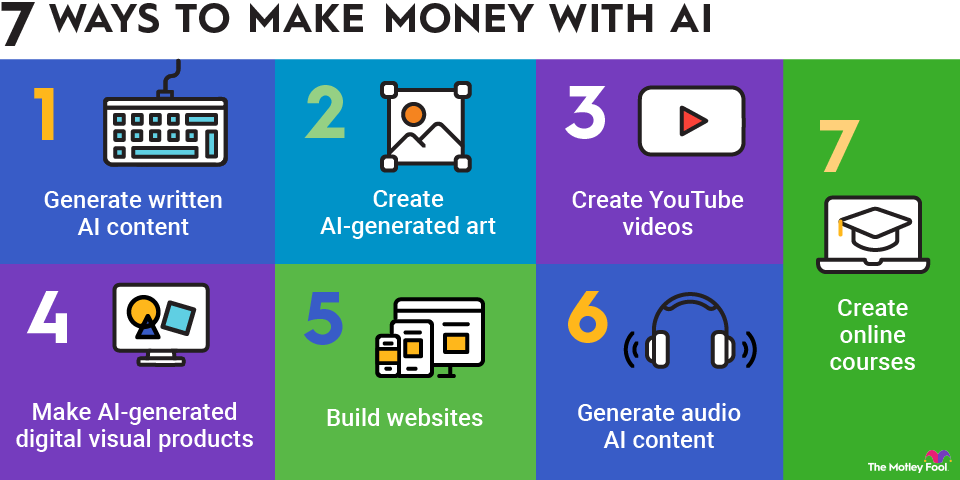
3. The Faceless Video & Audio Empire
Content creation remains one of the most lucrative digital side hustles in the world. However, many beginners are terrified of getting in front of a camera or lack the technical skills to edit engaging videos. In 2026, the barrier to entry for high-quality video production has effectively dropped to zero.
The Strategy
The goal is to pick a high-retention, high-CPM (Cost Per Mille) niche. Excellent niches include personal finance, ancient history mysteries, tech explainers, and stoicism. You will use a stack of AI tools to generate the script, the voiceover, the visuals, and the background music.
The Execution Steps
- Ideation and Scripting: Use a large language model (LLM) like Gemini or Claude 3.5. Do not just ask it to "write a video about Rome." Ask it: "Analyze the top-performing history YouTube Shorts. Identify the psychological hooks they use. Now, draft a highly engaging 60-second script about the lost legion of Rome, optimized for viewer retention."
- The Voiceover: Use ultra-realistic AI voice cloning tools like ElevenLabs or Murf AI. The quality in 2026 is virtually indistinguishable from a human voice actor. You can select pacing, tone, and emotion.
- The Visuals: This is where things have leveled up. Use text-to-video models to generate cinematic B-roll. Google's Veo 3.1 and Runway Gen-3 are state-of-the-art for generating high-fidelity videos.
- Global Localization: Once a video does well, use AI dubbing tools to translate your voiceover into Spanish, Hindi, or German, matching the lip-syncing perfectly. You can now launch channels in five different languages with zero extra filming.
How to Monetize
- Ad Platform Revenue: YouTube AdSense, TikTok Creator Rewards Program, or X (Twitter) monetization.
- Freelance Dubbing: Offer your AI localization skills to established YouTubers. Charge $100-$500 to translate and dub their existing catalog into new languages.
- Selling Voice Assets: Create reusable "Voice Packs" or IVR (Interactive Voice Response) prompts for corporate phone systems and sell them on digital marketplaces.
4. Print-on-Demand (POD) 2.0 and Digital Products
Digital products and POD are the ultimate "build once, sell forever" business models. You create the asset once and can sell it an infinite number of times with zero inventory costs or shipping headaches.
The Strategy
You use advanced AI image generators to create stunning, commercial-grade artwork, planners, and templates that target specific, passionate niches (e.g., "ADHD organization tools," "Retro-futuristic gamer posters," or "Minimalist nurse apparel").
The Execution Steps
- Generate the Art: You do not need an art degree. Use state-of-the-art AI image generators like Midjourney v7, DALL-E 3, or Nano Banana Pro. The key here is Prompt Engineering. Don't type "a cat." Type: "A minimalist, single-line art drawing of a sleeping cat, black on a white background, Scandinavian style, vector graphics."
- Set Up the Store: Upload these designs to Print-on-Demand fulfillment centers like Printful or Printify. Apply your art to t-shirts, mugs, phone cases, and canvases.
- Automate the Sales: Connect your Printful account to an Etsy or Shopify storefront. When a customer buys a shirt on Etsy, Printful automatically prints it, packs it, and ships it to the customer. You keep the profit margin without ever touching the product.
- Digital Alternative: If you don't want to sell physical goods, use AI to outline and design digital planners, Notion templates, or "AI Prompt Libraries" (e.g., 100 Copy-and-Paste AI Prompts for Real Estate Agents) and sell them instantly via Gumroad.
How to Monetize
- Etsy Marketplaces: Tap into Etsy's massive existing buyer base by optimizing your product listings with AI-written, SEO-rich descriptions.
- Gumroad: Best for selling pure digital downloads, templates, and courses.
tadkatopics
5. Programmatic SEO and Niche Publishing
For years, building a profitable blog meant spending grueling hours writing articles from scratch and hoping Google would rank them. Today, AI has turned SEO (Search Engine Optimization) into an absolute superpower for beginners.
The Strategy
Do not sell spammy, AI-generated content. Search engines will penalize you. Instead, use AI to identify "content gaps" on the internet—topics people are searching for but where no good articles exist. Then, use AI as your research assistant to create deeply helpful, well-structured content at scale.
The Execution Steps
- Discovery: Use AI tools integrated with search data to find low-competition keywords. You are looking for long-tail, specific queries like "Best hiking boots for flat feet under $100."
- Content Generation: Use NotebookLM or ContentShake AI. Feed the AI fact-based source material (like product specs or expert interviews) and ask it to draft a comprehensive, 2000-word guide.
- The Human Polish: This is mandatory. You must edit the AI's output. Inject your own personality, add human anecdotes, ensure the formatting is highly readable, and embed original images.
- Scale: Because AI handles the heavy lifting of outlining and drafting, you can publish 5 to 10 high-quality articles a week instead of just one.
How to Monetize
- Affiliate Marketing: Place links to the products you review in your articles (e.g., Amazon Associates). When a reader clicks and buys, you earn a commission.
- Display Ads: Once your niche site hits a certain traffic threshold (usually 10,000 to 50,000 monthly sessions), apply to premium ad networks like Mediavine or Raptive to earn passive income from display ads.
The Ultimate 2026 Beginner AI Toolkit
To execute these strategies, you need to know which tools to use. Do not buy expensive subscriptions immediately. Almost all of these tools offer generous free trials or freemium tiers. Start there, learn the mechanics, and only upgrade when your business starts generating revenue.
| Category | Best For... | Top AI Tools to Master in 2026 |
|---|---|---|
| Text & Strategy | Brainstorming, SEO writing, business plans, scripts. | Gemini, Claude 3.5, ChatGPT, NotebookLM |
| Images & Design | Print-on-Demand, logos, thumbnails, ad creatives. | Midjourney v7, Nano Banana Pro, Canva AI |
| Video Generation | Faceless B-roll, corporate explainers, short-form clips. | Veo 3.1, Runway Gen-3, Synthesia, CapCut AI |
| Audio & Voice | Voiceovers, audiobooks, dubbing, background music. | ElevenLabs, Murf AI, Meta SAM Audio, Lyria |
| Automation & Ops | Connecting apps, building chatbots, syncing data. | Gumloop, n8n, Zapier, Botpress |
| Code & Micro-SaaS | Building apps and websites without knowing how to code. | Cursor, Lovable, Bolt, Replit Design |
Your 30-Day Launch Blueprint
Reading about these methods will not put money in your bank account; executing them will. Most people fail because they suffer from "shiny object syndrome." Here is your exact, no-nonsense blueprint for the next 30 days:
Week 1: Pick One Lane and Commit. Do not try to start a YouTube channel, an Etsy store, and a local consulting business all in the same weekend. Choose one monetization model from the list above. Write it down. Ignore everything else.
Week 2: Master Prompt Engineering. The quality of your income depends entirely on the quality of your AI inputs. A bad prompt yields a robotic, generic output. A great prompt yields a masterpiece. Spend this week watching free YouTube tutorials on prompt engineering for your chosen tools. Learn to "speak AI."
Week 3: Build a "Mock" Portfolio. Do not wait for someone to hire you or give you permission to start. Create three fake projects to prove your competence.
- If you chose SEO writing, write three spectacular articles.
- If you chose POD, design five t-shirts and create mockups in Canva.
- If you chose Automation, build a working chatbot for a fake dental clinic. You need tangible evidence of your skills.
Week 4: Launch and Pitch. Business is a numbers game.
- If you are freelancing or consulting, send 10 cold emails or LinkedIn messages a day to potential clients showing them your mock portfolio.
- If you are doing YouTube or SEO, publish your first 5 pieces of content.
- If you are doing POD, list your first 20 products on Etsy.
Final Thoughts
The AI revolution of 2026 is not about machines replacing human effort; it is about rewarding the humans who learn to direct the machines.
The people who complain that AI is "oversaturated" are the ones still trying to sell low-effort, unedited ChatGPT text. The people who are quietly building wealth are treating AI like a brilliant, hyper-efficient intern. Step into the director's chair, choose your niche, and start building. The tools have never been cheaper, and the barrier to entry has never been lower.
The only thing left to do is start.






Comments
Post a Comment